Archive for the ‘Dogs’ Category

What is mitral valve disease and can it be cured?

The most common heart condition in dogs is called endocardiosis – and the most common form of endocardiosis is MVD. So, what is it, how is it diagnosed, and what can be done about it? 
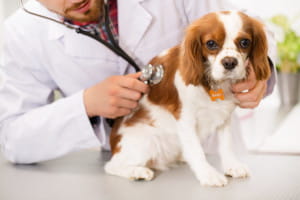
What is endocardiosis?

Put simply, it’s degeneration of the valves in the heart – which is why it’s also called valve disease. Inside the heart there are four valves (mitral, tricuspid, aortic and pulmonic), and endocardiosis can (and does) affect any or all of these. That said, the mitral valve is most commonly involved. Some breeds are predisposed – for example, Cavalier King Charles Spaniels are at very high risk of MVD.

Why is this important?

The valves work to maintain a one-way flow of blood through the heart. In endocardiosis, the edges of these one-way valves become thickened and irregular, so they become leaky (this is known as valve incompetence or valve leakage). This means that blood leaks backwards through the heart, reducing heart efficiency.

Now, for a while, the heart can compensate for reduced efficiency by increasing the strength of each beat, and the heart rate. This is known as the compensation phase, and usually the only symptom is a heart murmur (an abnormal sound heard when listening to the heart with a stethoscope, caused by irregular bloodflow).

However, the compensation phase won’t last forever, and eventually the heart will begin to fail. Initially, this presents with a reduction in the dog’s ability to exercise, but it will progress to congestive heart failure.

What is congestive heart failure?

CHF occurs when the heart’s pumping capacity begins to fail. There are two components – pump failure and excessive water retention. These two go hand in hand, as reduction in pumping capacity causes a reduction in blood pressure, which triggers a number of body systems that work to retain water and salt, boosting blood pressure. This system is great if the dog has lost blood pressure because of bleeding, but in heart failure, it actually makes things worse because the heart now has to work even harder to shift the extra blood volume around the body. This results in heart enlargement (mainly of the left atrium), which further reduces the heart’s efficiency and pumping power.

CHF causes a range of symptoms, but these usually include:

  1. Difficulty exercising and blueness of the gums, because the heart can’t get enough oxygen to the muscles
  2. Coughing, as the enlarged heart presses on the airway
  3. Fluid in the abdomen (ascites) and lungs (pulmonary oedema), as fluid “backs up” behind the heart, filling the lungs and organs with fluid
  4. This is usually the cause of death – the dog drowns in the excess fluid in their lungs

How is it diagnosed?

Often, we will be able to make a pretty good guess as to what the problem is just by listening to your dog’s heart, to hear what sort of murmur they have, and wherein the heart it seems to be coming from. However, we will often also do X-rays to assess how large the heart is and how much fluid there is in the lungs. However, the “gold standard” technique is for us to use echocardiography to look inside the heart using ultrasound, and see exactly what’s going on.

What treatment options are there?

At the moment, MVD and other forms of endocardiosis are not considered curable (but see below!). However, congestive heart failure can be managed effectively with drugs, often for years. The main drugs used are:

  • Diuretics, such as frusemide or spironolactone. These reduce the amount of water in the body, helping to keep the lungs dry so the dog can breathe
  • ACE inhibitors, a class of drugs that reduce the abnormal fluid buildup. These don’t improve lifespan, but massively improve your dog’s quality of life
  • Pimobendan, a drug that helps the heart beat harder, prolonging life

There are management changes as well which are also useful – exercising little and often, keeping your dog cool, and monitoring their sleeping respiratory rate (an increase is often the earliest sign that fluid is starting to build up in the lungs). In addition, special cardiac diets exist that are also helpful.

What about surgery?

There is one experimental procedure being researched at the moment by vets at the Royal Veterinary College in London, and following the work of a team in Japan. This involves surgically replacing the damaged valves. At the moment it isn’t widely available, but the initial results look very promising!

If you’re worried about your dog’s heart, make an appointment to see one of our vets!

What is Pyometra, or ‘Pyo’?

A “pyo” is the common phrase used to describe a pyometra — a very serious and potentially fatal infection of the uterus (womb). It is one of the most common reproductive disorders in the bitch, but unfortunately, the initial symptoms are often vague and subtle, meaning that by the time we see these patients they are often critically ill. 

What causes it?

After every season the entire (unneutered) bitch will enter a false pregnancy (technically, the dioestrous phase of her cycle). In this period, which lasts a little over 2 months, the ovary releases progesterone to make sure that the uterus is prepared to maintain pregnancy, even if there aren’t actually any puppies in there. One effect of this is that the lining of the uterus becomes thickened and secretes fluid – this is the cystic endometrial hyperplasia complex.

Normally, this fluid will be reabsorbed at the end of the false pregnancy; however, sometimes it becomes infected as bacteria penetrate the uterus. The uterine secretions are a perfect growth medium for bacteria that otherwise would be essentially harmless (they’re generally normal vaginal and skin commensals).

The multiplication of the bacteria causes the uterus to fill with pus, causing severe systemic illness, septic shock and if untreated, death from septicaemia or shock.

Surely that can’t be common though?

Actually, studies suggest that pyometra affects 2.2% of the entire female population every year. Put another way, by 10 years of age, 24% of entire bitches will suffer a pyometra – that’s one in four. The high-risk period is the 2-4 months after a bitch’s season.

Are all pyos the same?

No, there are two different forms of the disease:

  • Open Pyo – this is usually a less severe form. It occurs when the cervix (the muscular valve that separates the uterus from the vagina) remains open. This allows the pus in the uterus to drain – meaning that the infection tends to grumble on, but is less likely to be rapidly fatal.
  • Closed Pyo – this is the most dangerous type, where the cervix is closed, preventing the pus from draining. These dogs become progressively more and more sick until the pressure in the uterus causes it to burst internally, leading to peritonitis, collapse, and death.

What are the symptoms?

Usually, symptoms start off fairly mild and become progressively worse. Some only apply to an open pyo, and some are common to both types. The usual signs are:

  • Off colour
  • Loss of appetite
  • Increased thirst
  • Increased urination
  • Licking at her back end (in open pyos)
  • Discharge from the vulva (usually red or brown, but occasionally white or yellow, pus – open pyos only)
  • Vomiting
  • Swollen abdomen
  • Collapse and death

Can it be treated?

Yes, if caught early enough. The treatment of choice is ovariohysterectomy – emergency surgery to remove the swollen uterus and the pus it contains before it can burst. If the bitch is in a state of dehydration and collapse, however, she may not be well enough to survive surgery immediately, so she will be admitted for intensive care (on a drip, antibiotics, and anti-inflammatories) until she is fit for surgery.

Obviously, the surgical route means that the bitch cannot be used for breeding again in the future, but it is the only treatment available for a closed pyo. There is a medical option; using antibiotics to fight the infection and certain hormones to shut down the uterus and push out the infection. However, this option may also impair future fertility,  doesn’t always work, and about 60% of the time the pyo will recur after the next season.

If I suspect my dog has any of these symptoms, what should I so?

A pyo is potentially fatal, so if you are at all suspicious, bring her in for our vets to check as soon as possible! We’ll carry out a full examination, and if necessary we’ll carry out an ultrasound scan to see if the uterus is indeed full of pus.

What is HCM?

HCM is the most common heart disease in cats and stands for Hypertrophic Cardiomyopathy. Although it has occasionally been reported in dogs, this is very rare.

So what actually is it?

HCM describes a condition where the muscle wall of the heart becomes diseased. The walls grow additional layers of muscle, becoming stronger and stronger (which sounds like a good thing). However, this causes two problems – firstly, the space inside the heart (the lumen) is narrowed, meaning that the volume of blood that can be pumped out with each heartbeat is reduced. The second problem is that the thicker heart wall cannot relax properly – so the heart cannot fill effectively between beats. This means that the cat’s heart rate increases, to maintain their blood pressure – but of course, the harder the heart works, the stronger and thicker the muscle becomes.

What causes HCM?

There are three main causes:

  • Primary HCM occurs in an otherwise healthy cat. It is the most common form and is thought to be a genetic disease. In some high-risk breeds (Maine Coons and Ragdolls) the exact mutations have been discovered and there are DNA tests that can be carried out, but these aren’t available for most cats.
  • Secondary HCM is a response of the heart to another disease process. This may be:
    • Hyperthyroidism (an overactive thyroid), the most common secondary cause.
    • Hypertension (high blood pressure), usually in turn due to kidney failure.

What are the symptoms?

Most affected cats show no symptoms at all in the early stages of the disease. This is because even though the heart is becoming less efficient, the cat’s body can compensate for the disease, masking the symptoms. In this phase, one of our vets may hear a heart murmur when checking your cat over at vaccination, but there usually aren’t any other signs. However, the condition is progressive, and eventually, they won’t be able to mask it any longer. Some cats progressively develop subtle signs that gradually worsen, but many appear absolutely fine until they suddenly collapse, or even drop dead – this is known as an acute decompensation crisis.

There are two different clinical syndromes associated with HCM:

  • Congestive Heart Failure – where the heart can’t pump blood effectively enough, leading to pooling of fluid in the lungs and other organs. Typical symptoms usually appear in more-or-less the following order:
    • Heart murmur
    • Abnormal heart rate or rhythm
    • Increased time spent sleeping
    • Less time being active or playing
    • Increased breathing rate
    • Increased breathing effort
    • Pale or blue gums and cold extremities
    • Collapse or fainting
    • Open-mouth breathing
    • Sudden death
  • Thromboembolism – the failing heart isn’t pumping blood smoothly through its chambers, and as a result, blood clots start to form within the heart. At any stage, bits of these clots can break off and travel round the body. If they come to rest, they will grow and block an artery, and the symptoms will depend on where this occurs:
    • Stroke – where the blood clot blocks blood flow in the brain. Symptoms include fits, collapse, blindness and coma.
    • Pulmonary embolism – occurs in the lungs, resulting in very sudden onset difficulty breathing.
    • Aortic thromboembolism, also known as a saddle thrombus, is the most common form – it is one of the most common presenting symptoms of a cat with HCM. This occurs because a blood clot has cut off ALL circulation to one or both hind legs, causing extreme pain and paralysis, and is often fatal.

How is HCM diagnosed?
There are two ways the condition can be diagnosed; however, the DNA test is not one of them. This is because some cats who have the mutation don’t develop HCM, while many cats without it do.

A better “screening test” is the proBNP blood test – any cat with a raised proBNP level is likely to have some form of heart disease and needs further investigation.

The “gold standard” for diagnosis, however, is echocardiography, where a vet uses ultrasound to look inside your cat’s heart and measure how thick the wall is and how well their heart is working.

It’s important to remember, though, that just because a cat doesn’t have HCM, it doesn’t mean they’ll never develop the disease – it’s a condition that can develop at any age, and so cats in high-risk breeds should be regularly tested.

Is there any treatment?

Sadly, there is no cure for the genetic form of the disease. Affected cats should never be bred from, and if possible, all Maine Coon and Ragdoll cats should undergo DNA testing before they breed, in case they are carriers of the defective gene. Cats with Secondary HCM, however, can sometimes be returned to almost normal heart function if the underlying disease is detected and treated early enough.

In most cases, medical treatment is required. The mainstays of treatment are:

  • Slow down the heart rate – our vets may use drugs such as beta-blockers for this.
  • Help the heart relax between beats – a drug called diltiazem is licensed for this purpose in the UK.
  • Prevent clots from forming – using human drugs such as aspirin or clopidogrel at specific feline doses on prescription.
  • Reduce fluid buildup – ACE-inhbuilduprugs like benazepril and diuretics like frusemide are commonly used to reduce fluid pooling, helping the cat to breathe.

How long can a cat live with HCM?

The prognosis for cats with HCM is very variable – some cats may never develop clinical signs and will live normally for many years. Once symptoms appear, most cats survive less than two years; if the first symptom is a blood clot, the average survival time is only six months. As a result, the best prognosis is thought to be for cats diagnosed early, before symptoms appear!

If your cat is in an at-risk breed, or you are concerned about heart disease, make an appointment to get them checked out by one of our vets. If necessary, they can arrange blood testing or heart scans to see what’s actually going on!

I think my dog’s scratched his eye – what should I do?

First things first – get him down to us to check it out! Dogs’ eyes are delicate, and it’s really important that we’re able to treat any injuries quickly… 

Why do dogs get scratched eyes?

Any object that is either hard or sharp will scratch the cornea (the front layer of the eye) – grass blades, thorns or brambles, a cat’s claws, etc. As a result, this type of injury is known as a corneal ulcer or corneal laceration. The most common cause is running through thick undergrowth or grass and not blinking quite fast enough! It’s also fairly common for a grass seed, a blade of grass, or even a clump of hair to become trapped underneath the eyelid, causing scratches every time the eyeball moves.

If a dog encounters an aggressive or particularly scared cat, they will often make a swipe with their claws – and may catch the dog’s eyes.

The other big problem is with dogs with protuberant eyes (like Pugs) who cannot extend their eyelids to cover the whole surface of the eye. Inevitably, these dogs are at higher risk of eye injuries!

What are the symptoms of a scratched eye?

The most common signs are:

  • Runny eyes
  • Redness of the membranes around the eye
  • Swollen tissue around the eye
  • Milkiness or blueness of the surface of the eye
  • Pain and rubbing
  • Holding one eye closed

Is there any other condition that can be mixed up with it?

Yes – most commonly dry eye (keratoconjunctivitis sicca), where the eye doesn’t produce enough tears; as a result, the centre of the cornea dries out and cracks or ulcerates.

What will the vet do?

Firstly, we’ll try and find out how severe the injury is. To do that, we may have to sedate the dog, but usually, we can use local anaesthetic to stop it hurting and allow us to examine the eye. Once we’ve had a really good look at the injury and the rest of the eyeball, we’ll use a special dye called fluorescein – this sticks to damaged corneal cells, showing us how wide and how deep the injury is. We can then decide on the best course of treatment.

What can be done about it?

The vast majority of corneal injuries are fairly minor and respond really well to simple treatment. This usually involves a short course of antibiotic eye drops and some painkillers for a week or so. If by the end of this time the injury is healing but not quite gone, we can usually just extend the treatment for another week or so. The reason we use antibiotics is that it’s usually just the infection in the wound that stops it from healing on its own!

Is there anything else you might do?

Additional drugs and treatments are available to encourage healing, most commonly plasma drops. This is a liquid that is extracted from the dog’s own blood (we’ll take some if we need to!) that is full of pro-healing, anti-infection and anti-wound breakdown chemicals; and is applied as an eyedrop. Other options include EDTA drops (which do a similar job) and bandage lenses (soft contact lenses that will protect the eye while it heals).

A really serious laceration of the cornea may require surgery – often a pedicle flap to use part of the lining of the eye as a tissue graft to protect and nourish the injury and allow it to heal.

What if it doesn’t heal in that time?

If the eye doesn’t heal normally, the injury may become an indolent ulcer. In this case, we may perform surgery to encourage healing (such as a grid keratotomy); or use a pedicle flap or graft as above.

It’s very, very unusual to come across a scratched cornea that won’t respond to one or more of the advanced treatments we have available now!

If you think that your dog may have an injured eye, get them to us for a checkup as soon as possible.

Does Distemper still exist?

Sadly yes, distemper is still present – and potentially deadly – in the UK. In other countries, where a much smaller percentage of dogs are vaccinated, it is much more common (for example in Finland distemper is still a significant cause of death for dogs). 

So what is distemper?

Distemper is a viral disease of dogs. It is closely related to several other diseases including Seal Distemper (in seals, unsurprisingly), Rinderpest (in cattle) and  Measles.

How is it spread?

By droplets in the air containing body fluids – faeces or diarrhoea, vomit, urine or even air breathed out by an infected dog or fox. Once inhaled or ingested by another dog, the virus invades the dog’s lymphatic system and spreads throughout the body.

Fortunately, the virus does not survive well in the environment and is killed by most disinfectants and cleaning agents.

What dogs are at risk?

Any unvaccinated dog is at risk of Distemper. The incubation period is about one week, and once infected, most dogs will develop disease to some extent. However, how severely they will be affected will depend on how rapidly, and how effectively, their immune system responds. If it responds fast and well, they may only suffer subclinical disease (mild, non-specific signs), whereas if it doesn’t respond properly, or is very slow, then the full-blown disease will result. Of course, many dogs’ immune systems will fall somewhere between these extremes, giving a range of severities.

So what are the symptoms?

The typical progression of symptoms is:

  • Fever
  • Lethargy, loss of appetite (in subacute disease, symptoms may stop here)
  • A runny nose and eyes
  • Intermittent fever
  • Vomiting and diarrhoea
  • A cough and difficulty breathing
  • Changes in behaviour (e.g. stupor or hysteria)
  • Wobbliness and/or seizures
  • Paralysis
  • Inflammation of the eyes, sometimes proceeding to blindness
  • Thickening and hardening of the foot pads and nose (hence the old name, “Hardpad”).

Other complications are common, typically secondary bacterial infections, such as pneumonia. Some dogs will apparently make a recovery, but then months or years later will develop brain problems (“Old Dog Encephalitis”).

It sounds nasty, but how serious is it?

Estimates for mortality suggest that between 20 and 50% of infected dogs will die. It really is that bad. The only good news is that dogs who are infected and recover usually have a very good immunity to the disease for some years afterwards, and possibly for life.

What about people – can we get it?

There is evidence that people can contract it, especially if they are very old, very young, or have a weakened immune system (e.g. due to disease, chemotherapy, or pregnancy). Fortunately, however, the disease is usually less serious in humans, and in any case the measles vaccine gives good protection.

Can it be treated?

Basically, no – there is no specific treatment for Distemper virus. Infected dogs will get full supportive therapy (intensive care nursing, anti-inflammatories to control the fever, antibiotics to control secondary infection, intravenous fluids), and medications to control the symptoms (e.g. antiemetics to stop the vomiting, anticonvulsants to stop seizures), but whether they live or not will depend to a great degree on how well their own immune system meets the challenge.

How can it be prevented?

Very easily – vaccinate your dog. And, just as importantly, make sure he gets his boosters on time! The Distemper component of modern vaccines lasts for quite a long time, so this vaccine doesn’t need to be repeated annually. However, don’t just do the primary puppy course and forget about it – it does need to be boosted at one year old, and then every three years, or the protection will drop and your dog will be at risk.

If you are concerned about Distemper, contact one of our vets for advice.