Archive for the ‘Dogs’ Category

Should I breed from my bitch?

Deciding whether or not to breed from a pet can be really hard; and it’s very easy to talk yourself into doing something that you later regret…! So in this blog, we’ll look at some of the things you have to consider when breeding from a pet bitch… 
Are her genes good enough to preserve?

Just because a dog is a fantastic pet, with a great character and temperament, it doesn’t necessarily follow that she’s good breeding material. Remember too, that there are thousands of homeless dogs in rescue centres – you should have a good reason for adding to the numbers of dogs in the world.

Now, that doesn’t mean you shouldn’t breed from her – but you need to be certain that you’re adding something special to the canine gene pool. For example, it’s usually unwise to breed a crossbred dog, unless there’s something in particular you want to preserve – this is because you can have no idea how the puppies will turn out! I’ll also point out that, for the purposes of genetics, “breeds” like Jackpoos or Labradoodles are crossbreds – they cannot breed true. Pure-breed dogs have very limited genetic variability, meaning that the offspring are likely to be physically, as well as genetically, similar to the parents; this is not necessarily true of crossbreds, because of a genetic phenomenon known as masked recessive genes.

If your bitch has or has had any potentially heritable diseases (like an undershot jaw, entropion – turned in eyelids – or a cruciate ligament injury), then you don’t want to breed from her. You should also never breed a dog without a good hip – and elbow score; and you might also consider getting DNA tests done for other genetic conditions known in the breed – give us a ring and we’ll be able to advise you on what tests are available. Sadly there are too many dogs from substandard bloodlines being produced, especially when the breed is in fashion, resulting in serious health and welfare problems in future generations.

Is she medically a good candidate for breeding?

In other words, is she physiologically and medically fit to be mated and bear a litter? The first thing to consider is her age – as a rule of thumb, dogs start their seasons in their second year of life; however, this is really variable – especially between breeds, as giant breed dogs are much slower to reach maturity than small breeds are. Generally speaking, however, it is never wise to breed a bitch for the first time under 1 year of age and over 7. For most dogs, however, 2 years of age is the safe minimum. If you’re considering breeding a young or older bitch, give us a ring and we’ll be able to advise you.

The next question is whether she has any medical conditions that would make it difficult, or impossible, to bear a litter successfully. For this, you’ll need to bring her in – make an appointment to see one of our vets for a pre-breeding check. Conditions that may impair her breeding ability include pelvis injuries, hormone imbalances like Cushing’s Disease, and many more, so let us make sure she’s in tip-top condition!

Can you take care of her while pregnant and whelping?

Pregnancy itself is pretty easy for most bitches – however, whelping can be very hard on them. You need to know what danger signs to look out for, when to call us, and when it’s an emergency. You also need to budget for pregnancy scans and a contingency fund to cover a caesarean operation if whelping goes badly.  
Are you legally covered?

There is a specific law covering breeding bitches – the  Breeding and Sale of Dogs (Welfare) Act 1999; this means that you need a license to breed from a bitch if you are producing 5 or more litters per year on the premises, or if the local authority suspects that you are breeding for commercial gain. If in doubt, contact your local Environmental Health Office for advice (strangely, they’re the people responsible for enforcing the Act!).

What will you do with the puppies?

A bitch may produce up to 12 (or even more!) puppies in a single litter (although this is rare). You need to be able to care for them, get them vaccinated and microchipped, and then find good loving homes for them all. Can you do that?

Will the benefits outweigh the potential costs?

Successfully breeding and rearing a litter of puppies is incredibly satisfying; however, it is also expensive and occasionally heartwrenching. You need to be ready for that – and don’t assume you’ll necessarily make the money back when you sell the puppies!

If you want to breed your bitch, give us a ring and we can talk you through all the details!
 

I’m taking my dog abroad – what do I need to treat for?

Ultimately, of course, it depends on where you’re going. In addition, you will need to make enquiries and find out what the legal requirements for entry are – and for re-entry into the UK afterwards!

So, what are the legal requirements?

For most EU countries, there are no particular entry requirements to take your dog abroad; however, they will not be allowed straight back into the UK afterwards unless they have been vaccinated against rabies and have a legal Pet Passport to prove it. In addition, they must have been treated against tapeworms between 24 and 120 hours before returning (unless you’re coming directly from Ireland, Finland, Malta or Norway).

If you’re travelling outside the EU, it gets more complicated. Each country sets its own entry requirements, and most of them require that your dog is certified as free from disease by a vet before entry. If in doubt, give us a call and we can advise you! Coming back from non-EU countries is also complex; some destinations are “listed countries”, which means that their requirements for re-entry into the UK are similar to those for the EU (for example, Canada, Japan and the USA); these “Listed Countries” are specified here. If you’re coming from any other country, you still need to have your dog rabies vaccinated, but they must also pass a blood test (unless the vaccination was done in an EU country and certified on a Pet Passport).

We strongly advise all clients wishing to take their dogs outside the EU to read our website and research themselves the guidelines and information well in advance of travel. Click here for the website page.

If you want more information about the legal requirements, see the DEFRA pet travel website.

What if my rabies vaccination is out of date or I don’t have the paperwork?

In that case, your dog will have to spend time in quarantine before being allowed back into the UK. They will have to stay there for up to 4 months, to demonstrate that they aren’t carrying rabies.

OK, that’s the law – do I need to do anything else?

Definitely – the legal requirements are the bare minimum, designed to protect the UK from disease (mainly rabies and the Hydatid Tapeworm, Echinococcus multilocularis). They are not intended to protect your dog from any health risks.

The specific risks to your dog’s health will of course depend on where you’re going, as the world is full of “exotic” diseases not found in the UK. In Europe, the major threats to dog health are:

Leishmania

This is a parasite that is transmitted by sandflies living around Mediterranean coastlines; it causes weight loss, skin and eye infection and inflammation, enlarged lymph nodes and chronic lameness. Although it can be treated, it is almost impossible to cure completely. The best way to prevent it is to avoid woodland and shady areas during the dawn and dusk periods, prevent your dog from sleeping outside and use an effective sandfly repellant. There is also a vaccine available – talk to one of our vets about suitable repellants and medications.

Heartworm

This is (unsurprisingly) a worm that lives in the dog’s heart, called Dirofilaria immitis. It is transmitted by mosquitoes, and eventually (but often not for 6-12 months) causes heart failure and difficulty breathing. The best prevention is by using effective mosquito repellants for dogs (our vets can advise you) and, if you’re travelling to a high-risk area (like southern France), medications to kill the parasites before they become established.

Canine Brucellosis

This is an infectious disease transmitted through infected birth fluids of bitches, and also by the venereal route (essentially, it’s a dog STD); it is most common in Eastern Europe. It can, rarely, affect humans as well, so don’t be tempted to help out with newborn puppies in a high-risk area! The best method of prevention is to avoid contact with whelping bitches, and not to let your pet have sex with any locals…

Tick-borne Diseases

Ticks can carry a wide range of nasty conditions (even in the UK we have Lyme disease and now Babesiosis); in continental Europe, infections also include Ehrlichiosis (which damages blood vessels and causes abnormal bleeding), Hepatozoonosis (most common around the Mediterranean, a protozoal parasite causing fever, weight loss, pain and anaemia), and Tick-Borne Encephalitis (a virus that damages the brain and nerves, and can infect humans, found sporadically across mainland Europe). The best way to prevent infection with these diseases is to use a tick repellent and tick-killing drug; and to remove ticks rapidly once found – ticks are unlikely to transmit disease in the first 24-48 hours of feeding.

So, if you’re planning to take your dog abroad, come in and talk to one of our vets in plenty of time, and we can put together a suitable treatment plan to make sure they come back happy and healthy!

My dog jumps up at visitors, how can I stop him?

Probably the most common behavioural “problem” in dogs is inappropriate jumping. This can either be jumping at you, the owner; or at visitors to the house; in either case, it can be really frustrating and embarrassing! 

Why does my dog jump at my visitors?

To control this behaviour, it’s important to understand why dogs do it in the first place. In the vast majority of dogs, there are two main drivers for jumping – firstly, a desire for attention; and secondly, that they have inadvertently been trained to do it.

Most dogs crave attention; and jumping up is a way to try and interact with you on your level (i.e. 3 or 4 feet above their heads when they’re standing on the ground!). This is especially an issue when you have visitors – because the chances are, you’re greeting or talking to your guests, and ignoring the dog. Of course, you know that’s because your visitors are only around temporarily, and your dog is a permanent part of the family – but they don’t see things like that. They just see you ignoring them and lavishing your attention on your guests, meaning that they feel left out. Of course, it is quite possible that they want attention from your guests as well!

In addition, most puppies learn early on that jumping (especially balancing on their hind legs) gets them attention. As puppies, this is often in the form of reward (fuss, even treats, as people think that they’ve “learnt a trick”). As adults, this may continue, or their owners may shout at them – but when you’re shouting at your dog, you are still giving them attention, and not ignoring them (which, from their point of view, is worse than being scolded). Our inconsistency here doesn’t help – many people are happy for their dog to jump at them, but not at guests, or when wearing some clothes but not others – but by accepting (or rewarding) any jumping behaviour, they are essentially teaching the dog that jumping at people is acceptable. Dogs are generally poor at distinguishing between those situations when a behaviour is acceptable and those when it isn’t.

There is a third possible reason, although fortunately, it is very rare – it may be a form of aggression towards your guests. If a dog makes warning signals (hackles raised, growling, tail down etc) and these are ignored, they may make mock attacks, that could be misinterpreted as jumping. In this situation, the dog will be showing their teeth, growling and possibly snapping. This is very unusual but is very dangerous if it does occur.

So, jumping up may be seen as a way for your dog to demand attention from you – or from your visitors themselves. Alternatively, it may be because they have learnt that jumping is an appropriate response when they’re excited to meet new people; or because people aren’t responding to their “get out of my home” signals. Whatever the cause, however, it isn’t acceptable behaviour – and the bigger the dog, the less acceptable it will be to your visitors!

So, what can be done to stop it?

If your dog is jumping and showing signs of aggression, stop reading this now and contact a qualified canine behaviourist. This is a potentially dangerous situation and requires professional attention.

However, it is far, far more likely that your dog is attention-seeking and/or excited. In these situations, there are two main approaches to stopping dogs from jumping up. It is vitally important to remember that neither of them involves punishment. Punishing your dog for jumping will, at best, confuse them; and at worst result in a frightened and potentially aggressive dog – this is a recipe for disaster.

The first method is to divert the jumping behaviour into something more appropriate – usually a “sit” command. As the dog gets more and more excited and bouncy, you tell them to sit – and then reward them when they do, with fuss and/or a treat. This way, the dog gets some attention and learns that “sit” is appropriate, but “jump” isn’t. Meanwhile, you can continue to greet and chat to your guests, while your dog sits obediently at your feet…

It sounds great, but it does take some work and practice! Ideally, invite some friends who can regularly visit, and who understand the training you’re doing; they can visit (and even come in/go out/come back in repeatedly while you train your dog).

The other thing you can do (and this is really useful on its own or in conjunction with “sit” training) is to completely ignore your dog whenever they jump. You do, however, reward them when their front feet are on the floor. This way, you are teaching them that jumping does NOT result in attention, but standing on all fours does. Again, having “mock-visitors” will help reinforce the fact that what you’re teaching them is universal – it doesn’t go out of the window when new and exciting people are around!

In both cases, it takes time and patience – but it is more than worth it to teach them suitable behaviour before they knock over your elderly aunt, or squash your young nephew! If you’re struggling, contact a qualified canine behaviourist (our vets will be able to recommend one) who can help.

Mast Cell Tumours in dogs, what are they, and how can it be treated?

Mast cell tumours originate from Mast Cells

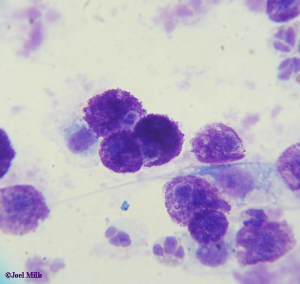
Mast cells are found in normal healthy dogs; they are white blood cells, found near blood vessels within the connective tissue. The cells are particularly equipped to catch germs and prevent them from spreading throughout the body, but they are also able to repair tissue and assist in creating new blood vessels. Essentially, they are pretty important as they play a key role in defending the body and keeping the immune system healthy and strong. They also release histamine and other compounds which are involved in allergic reactions. 

So, a mast cell tumour is…?

Mast cell tumours occur when cancerous changes occur in the mast cells, allowing them to multiply too quickly and out of control. Mast Cell Tumours are very variable in appearance,  from smooth, skin coloured swellings to angry looking masses with numerous, bumpy lumps. The lump may well appear inflamed and be itchy, causing your pet some irritation and discomfort. If the tumour is in a more progressive stage then vomiting and diarrhoea can occur due to the excess levels of histamine produced by the cells of the tumour.

Brachycephalic breeds (the ones with short snouts and wide heads e.g. Boxers, Pugs, Bulldogs etc.) are at a particularly high risk of developing these tumours. The perineum (the area between the genitals and anus) is a common site for mast cell tumours, but they can also occur on the limbs, face or anywhere on the body. If you notice a new lump anywhere on your pet, it is always worth getting it looked at by one of our vets.

Sometimes the tumour will grow quickly so it is important to contact us ASAP to discuss any new lumps appearing on your pet.  Histamine, released by Mast Cell Tumours, can cause swelling in the surrounding skin, and can cause them to fluctuate in size – they can even reduce in size after a rapid increase, so even if a lump appears to be getting smaller it is vital to get it checked.

Grading

There are different grade categories that a mast cell tumour can fall into; please use the overview below for a whistle-stop description of each level. If your pet does have a mast tumour, you will be told which grade their lump falls under.

Grade 1:
A slow growing, benign lump.

Grade 2:
The tumour has spread to deeper, subcutaneous layers. Fast growing and unpredictable growth. Likely to be malignant.

Grade 3:
Deep, aggressive tumours. Grow quickly. Malignant.

Grade 4:
The tumour has already spread or metastasised, to another part of the body.

Diagnosis

It is not impossible to diagnose a mast cell tumour simply by looking or examining the lump. Mast Cell Tumours are usually diagnosed from cells gathered by ‘Fine Needle Aspirate’, our vets use a need to sample the mass. We may need to do a variety of other investigations such as X-ray, ultrasound, blood tests and lymph node and bone marrow sampling to establish if the tumour has spread.

Treatment

Surgery is the usual method of removing mast cell tumours, where surgery is difficult or impossible due to the location of the tumour radiotherapy may be used. Depending on the grade of the tumour, a wider circumference of skin may need to be removed to prevent the tumour spreading. The surgery varies enormously depending on the location of the tumour and its size, our vet team will inform you fully of the procedure and aftercare. If the Mast Cell Tumour is in a position where surgery is difficult or impossible radiotherapy may be used to remove the tumour.

If the mast cell tumour has spread, a course of chemotherapy may be required after the operation. The chemotherapy will target any remaining dangerous cells that have not been removed by surgery or radiotherapy.
Mast cell tumours can be dangerous for your dog but the sooner you get your dog checked, the sooner a diagnosis can be made and the better the chances of successful treatment.

Regular body checks of your pet are a great way of knowing your animal’s body and the best way to pick up on something out of the ordinary.

If my dog breaks his leg, will he be in a cast?

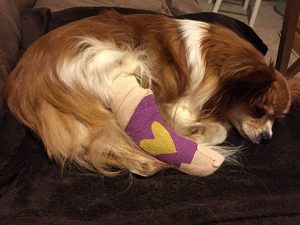
It’s possible, although sometimes other techniques are more suitable. Ultimately, if your dog does have a broken bone, our vets will choose whatever is the most suitable method to get it to heal as fast as possible! 

What determines which method to use?

There are a number of factors that we take into account when deciding what the best way to manage a fractured bone is:

  • Patient factors:
    • Age – young animals heal faster and more effectively than older ones.
    • Weight – the heavier the patient is, the more stable the fracture must be made as soon as possible, because they will struggle more to function.
    • Species – cat bones heal incredibly fast compared with dogs (or people for that matter!).
    • Concurrent disease – many diseases impair healing and mean that the fracture will be slower to heal.
  • Fracture factors:
    • Number of fragments – the more fragments there are, the more complex and difficult to repair the bone will be.
    • Stability – a stable fracture is one where all the fragments lie in their anatomical positions, and where the bones will tend to remain in their correct positions.

So when do you use a cast?

Casts are suitable for stable fractures with small numbers of fragments, in young and/or small dogs and cats. A functional cast will immobilise a joint above and a joint below the fracture site, so it is only usually appropriate for limb bones.

If a cast isn’t appropriate, what are the other options?

There are a wide range of different fracture management techniques, with different pros and cons:

  • Cage Rest:
    • Suitable for basically stable fractures of the pelvis, ribs and occasionally skull or shoulder blades.
    • Minimal movement, in a small cage, prevents stress being put on the broken bones, allowing them to heal.
    • Dogs and cats become frustrated after a few days and may have to stay in confinement for 4-8 weeks, but it is a cheap and simple way of managing these fractures.
  • Intramedullary Pins:
    • Suitable for fractures with small numbers of fragments which is stable in rotation but not inflexion; in a long bone (such as the radius, ulna, humerus).
    • A long pin is drilled into and down the bone, through the marrow cavity.
    • This is a surgically simple procedure but is limited to simple spiral and oblique fractures of the larger bones of the limb.
  • Plates and Screws:
    • Suitable for most fracture configurations.
    • A series of screws and plates are used to reassemble the bone, holding all the fragments in place.
    • This allows reconstruction of multiple, complex and massively disrupted fractures; however, the screws and plates occasionally need to be removed later.
  • External Skeletal Fixator:
    • Suitable for most fracture types.
    • An external scaffolding is used to hold a series of pins or screws in place, which immobilise each fragment in place.
    • Although time-consuming and complicated surgery, it allows repairs of even the most complicated fracture patterns.

What would happen if you used the wrong technique?

The common complications of a fracture become much more likely if an inappropriate technique is used:

  • Osteomyelitis – infection in the bone.
  • Malunion – where the fracture heals in an abnormal position or formation.
  • Delayed Union – where the bone takes an abnormally long time to heal.
  • Non-Union – where the bone fails to heal at all.

What should I look for when my dog is healing and recovering?

Normal healing is associated with gradual reduction in pain, inflammation, and malaise (where the patient feels ill in themselves), and an increase in function and weight bearing. Of course, the rate of improvement will vary to some extent between patients and even from day to day in the same patient, but you should always look out for:

  • Unexplained increases in:
    • Pain
    • Swelling
    • Discharge
  • More time non-weight bearing
  • Lethargy, hiding or other signs of distress.

Any fracture or other severe lameness needs veterinary attention!