
Two weeks, four flights and 6,000 miles from home – Goddard Vets’ very own Laurence Behrens shares his unforgettable volunteering experience in the Galápagos Islands.
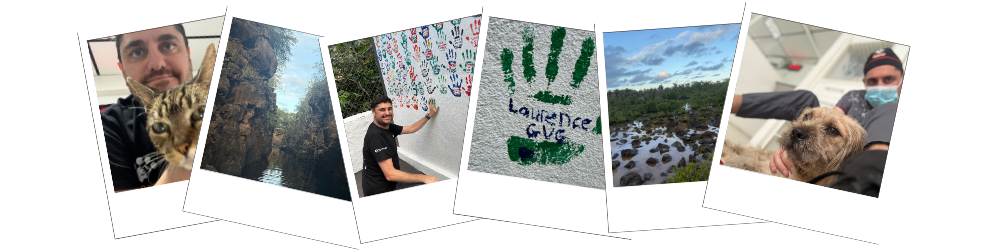
For Laurence Behrens, Branch Vet at Goddard Vets Dagenham Broad Street, summer 2026 brought an extraordinary opportunity to combine two of his greatest passions: veterinary medicine and volunteering.
Thanks to a successful application to the company’s charity grant, Laurence was awarded one week of paid volunteering leave. He decided to add a further week of annual leave, making the most of the opportunity to support an overseas animal charity. In June 2026, he embarked on an incredible 6,000-mile journey, involving four flights, to reach the beautiful Galápagos Islands off the coast of Ecuador.
“I was lucky enough to be awarded a week’s paid volunteering leave after a successful application to my employer’s charity grant. As I am passionate about volunteer work and an avid traveller, this scheme was right up my street. It was a simple and easy application process, involving a motivation letter, and gave me the opportunity to combine my veterinary experience with something I really care about.“
Supporting animal welfare in a unique part of the world
Laurence chose to volunteer with The Galápagos Animal Doctors, a joint venture between Worldwide Veterinary Service (WVS) and Pan Animalia (PAG).
The organisation provides veterinary care to domestic animals across the Galápagos Islands, while also supporting conservation efforts through humane population control of cats and dogs, alongside community engagement and education.
Laurence joined a small veterinary team working alongside the local municipality to deliver veterinary care on Santa Cruz, the archipelago’s most populated island. Around 30 miles long, Santa Cruz is part of a UNESCO World Heritage Site, renowned for its extraordinary wildlife and unique ecosystem.
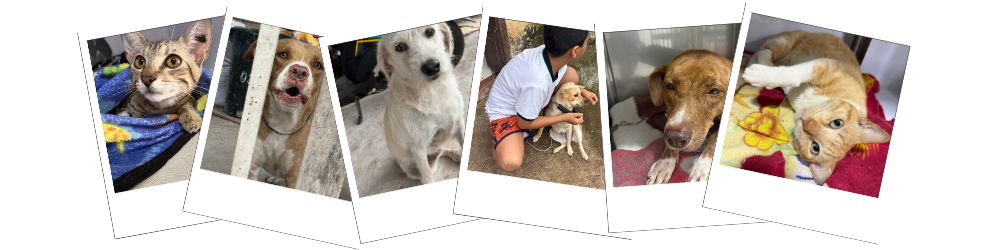
Based in a well-equipped veterinary clinic in Puerto Ayora, Laurence worked alongside a four-vet team, helping with everything from routine consultations and vaccinations to more complex medical cases and neutering procedures.
The clinic saw a varied caseload, including dog bite wounds, cat abscesses and more unusual infectious diseases such as Ehrlichiosis and Anaplasmosis.
“It was a great experience to share knowledge with the team, but also to learn from them and their local knowledge. I was delighted that my previous experience at Goddard Vets meant I could support the team with several dental extractions that would not otherwise have been routinely undertaken. I also managed to keep myself educated in the nursing skills department, as we were without a Veterinary Nurse during my time there!”
One particularly unusual skill Laurence picked up was ear tattooing. Following spay and castration procedures, animals were tattooed with the letter ‘P’ on their ears, marking them as neutered. It was certainly a new addition to Laurence’s veterinary skill set!
Making a difference in the local community
A significant part of the project involved supporting vaccination campaigns alongside the local municipality.
On campaign days, the team headed out into the local neighbourhoods, going door to door to offer free vaccinations for dogs. Microchipping was also provided for dogs that had not previously been chipped.
The response from the local community was fantastic, with more than 120 dogs vaccinated in a single day.
“It was amazing to see the uptake from people wanting to get their pets vaccinated. We only had one or two people decline the offer. It was clear that the local people really cared about their animals and wanted the best for them, even when working with financial limitations and fewer veterinary facilities than we are used to in the UK.”
Despite being thousands of miles away from London, Laurence was struck by how familiar many of the cases were. Gastrointestinal upsets, allergic skin conditions and feline cystitis, including blocked bladders, were all common presentations.
It was a reminder that, wherever you are in the world, pets and their owners often face very similar challenges.
A close encounter with Galápagos wildlife
Of course, volunteering in one of the world’s most remarkable wildlife destinations offered some unforgettable moments outside the clinic.
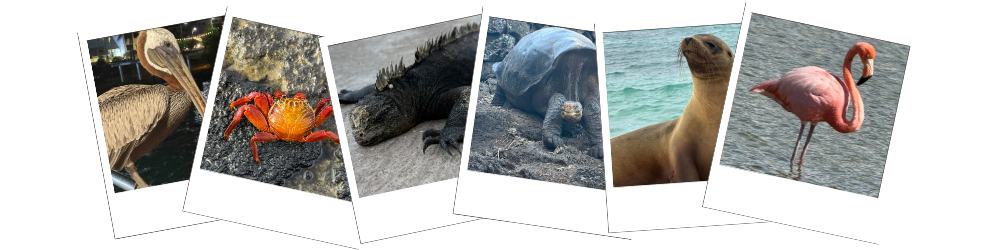
During one vaccination campaign, while walking through the outer neighbourhoods of the town, Laurence encountered a giant wild Galápagos tortoise – an incredible sight on the outskirts of a village!
He was equally impressed by the local community’s commitment to protecting the islands’ indigenous wildlife.
“What struck me about the Galápagos islanders was how conscientious they were about the care and wellbeing of their island’s animals. This extended beyond dogs and cats to the indigenous wildlife.”
“It was common to see vehicles travelling slowly, even on clear roads, to protect the local animals. I remember walking along the road by the harbour, where there were hundreds of baby marine iguanas. One particularly stubborn little iguana was basking in the warm road. Rather than simply driving around it, a local driver stopped, got out and gently encouraged it towards a safer basking spot.”
It was a wonderful example of how the local people respected wildlife and that it is embedded in everyday island life.
The challenges of island life
Although the experience was incredibly rewarding, it wasn’t without its challenges.
Working in temperatures of around 30°C, combined with high tropical humidity, made long clinical days physically demanding. Laurence quickly developed his own lunchtime routine: a refreshing dip in the sea to cool down before heading back to the clinic!
Language was another challenge. Not speaking Spanish made communication with local residents difficult at times, although Laurence soon picked up some essential veterinary vocabulary, including perro (dog), gato (cat) and vacuna (vaccine).
The Galápagos Islands themselves have a fascinating history. Discovered by Europeans in 1535, they became internationally famous following Charles Darwin’s visit in 1835. The islands’ extraordinary wildlife played an important role in shaping his ideas on natural selection, later published in On the Origin of Species in 1859.
A once-in-a-lifetime opportunity
Looking back on his two weeks, Laurence describes the experience as truly unforgettable. More than simply providing an extra pair of hands, he feels he was able to make a lasting contribution by sharing his veterinary knowledge and introducing skills that could continue to benefit the clinic and its patients long after his departure.
“I loved my time in the Galápagos and the volunteer work was incredibly rewarding. I could see that my two weeks at the clinic really made a difference – not just through physically being there, but also by bringing and teaching a new skill set to the staff.”
“The Galápagos is a magical place for any animal lover, and I would encourage anyone to visit, whether for volunteer work or pleasure.”
Laurence is particularly grateful for the support that made the opportunity possible and is keen to encourage other colleagues to consider applying for the volunteering scheme.
“Being supported to pursue my passion and experience new cultures and ways of working is really important to me. I would encourage my fellow vets and nurses to apply to the volunteering scheme.”
A huge thank you to Laurence for sharing his experience, and for representing Goddard Vets so brilliantly on the other side of the world! His experience was facilitated via a vetPartners charity grant and Goddard Vets, but mostly through his own determination and love of charity work.
Inspired by Laurence’s volunteering adventure? At Goddard Vets, we’re passionate about supporting our teams to make a difference, both inside and outside the practice.
Find out more about vetPartners volunteering scheme and explore our current clinical vacancies to discover where a career with Goddard Vets could take you.